
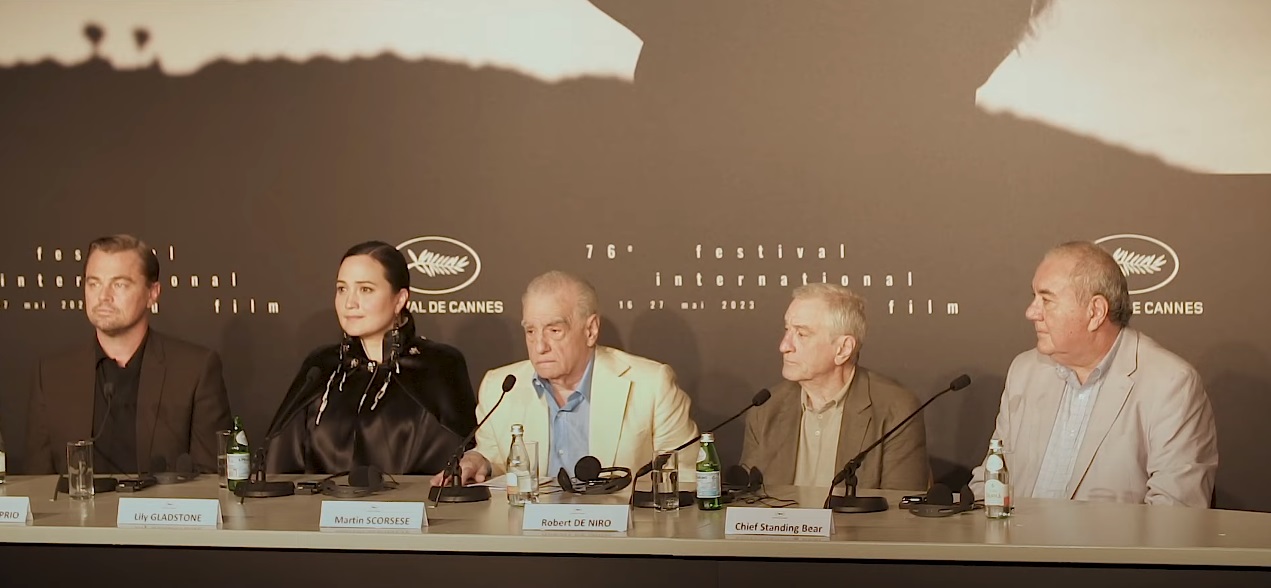
In the vast, sprawling canvas of Martin Scorsese’s Killers of the Flower Moon, amidst the monumental performances and the tragic sweep of history, one quiet, resonant force anchors the entire enterprise: Lily Gladstone as Mollie Burkhart. It is a performance that doesn't merely steal scenes; it builds a sanctuary of profound human experience, radiating a stillness that compels one to lean in, to listen with more than just ears.
We have witnessed epic narratives before, filled with grand gestures and operatic emotional peaks. But Gladstone’s Mollie operates on a different frequency. Her performance is a masterclass in cinematic subtraction, stripping away extraneous affectation to reveal the raw, unyielding core of a woman subjected to unimaginable cruelty. It’s the kind of work that immediately invites comparison to the giants, a demonstration of how a contained, deeply considered presence can often be far more devastating than any explosive outburst. It reminds me, in its quiet power, of Grace Kelly’s subtle brilliance in Hitchcock's Rear Window, where so much was conveyed in a glance or the slight tremor of a hand.
The Quiet Roar of Mollie Burkhart
From Mollie’s first appearance, Gladstone establishes an immediate, undeniable authority. She is not merely a victim in waiting, nor a passive observer. She possesses an inner dignity, a quiet certainty that makes her attractive, formidable even, in a landscape increasingly defined by avarice and violence. Her silences are not voids but dense fields of meaning. Consider the scene where she confronts Ernest Burkhart, early in their courtship, about his intentions. There’s no histrionics, no raised voice, but a direct, unwavering gaze that penetrates his practiced charm. This is a woman who sees, truly sees, even when those around her are blinded by greed or self-deception. It’s a gaze that cuts through the fog of deceit, a silent roar that warns us of the tragedy to come.
A Masterclass in Subtraction
What defines Gladstone’s approach to Mollie is an exquisite control over her internal landscape. She allows us glimpses into Mollie’s emotional torment without ever fully externalizing it until absolutely necessary. As the body count rises and the insidious poison of betrayal seeps into her own life, Mollie's resilience is chipped away, but never her spirit. The illness that befalls her, physically debilitating, becomes a metaphor for the systemic forces working against her people. Gladstone portrays this decline not with overt suffering, but with a weary acceptance, a hardening around the edges of her eyes, a slower, more deliberate movement. Her physical performance, particularly in the later stages of her poisoning, is heartbreaking in its understated realism, never once veering into the melodramatic. It’s a testament to Scorsese’s trust in his actor, and to Gladstone’s profound understanding of her character, that these quiet moments carry such immense weight.
The Gaze and the Guile
The core of the film, and indeed, Gladstone’s performance, lies in her complex relationship with Leonardo DiCaprio’s Ernest. She loves him, undoubtedly, but her gaze, even in moments of tenderness, retains a flicker of suspicion, a deep-seated apprehension that gradually confirms her worst fears. It's in the quiet scenes, where Ernest visits her bedside, offering hollow assurances, that Gladstone truly shines. Her eyes, often shadowed with pain, are also windows to a soul grappling with a love that has been poisoned from within. She is keenly aware of the guile that surrounds her, and while her body may betray her, her mind remains lucid, observing, understanding. It is a performance of immense strength, not of the brute physical kind, but of a spiritual endurance that transcends the film’s narrative. The dynamic is captivating, almost mirroring the way Liam Neeson's steadfast spiritual endurance played against the brutal physical world in Scorsese's own Silence.
This is a performance that demands attention, rewards repeated viewings, and will undoubtedly be studied for generations to come. It’s a profound reminder that some of the most powerful cinematic moments are not found in grand pronouncements, but in the unwavering strength of a character’s conviction, conveyed through the subtlest of human expressions. In a film where so many characters are consumed by outward ambition and moral rot, Gladstone’s Mollie Burkhart stands as a beacon of internal grace and resolute humanity. Her quiet, indelible power is, quite simply, undeniable.

![Outlander: Seasons 1–5 [Blu-ray]](https://m.media-amazon.com/images/I/71tlWlGdBpL._SL1001_.jpg)


